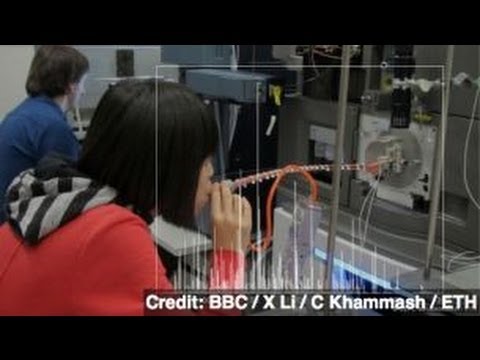
BY STEVEN SPARKMAN We’re used to medical diagnoses coming from blood tests, urine tests, even tissue samples. But what if there was a way to diagnose disease without even touching the patient? A new study in the open-access journal PLOS One says a person’s breath may be just as unique as their fingerprints — and could hold the key diagnosing diseases early. Breath has been a big area of study in recent years, because just like how it can be used to measure intoxication, it can also pick up other telltale health signs. A study released last month showed a simple breath test could diagnose heart failure and a 2011 study showed sniffer dogs can actually sniff out lung cancer on patients’ breath. (Via Fox News, euronews) io9 explain When you exhale, you expel more than nitrogen, oxygen, argon and CO2. There are also metabolites. ... leftovers from the biochemical processes that keep a body running.” The question is whether those metabolites vary from person to person, and whether a single person’s profile stays the same over time. It would have to be fairly stable to be medically useful. In the latest study, researchers set out to answer those questions. They had eleven participants take breath samples several times a day for nine-days — And it turns out those breathprints were both unique and stable. (Via Science Daily) The BBC reports the findings could lead to something like a breathalyzer, a small handheld device that can give readings in seconds. Only instead of blood alcohol content, it could diagnose disease, drug use — even doping in sports. But Wired points out this study is just a first step, with enough problems to justify a little skepticism. “The samples were taken over only nine days and the candidates were asked to keep their routine — including diet — constant, something that would be hard to affirm in the real world. ... None of the volunteers were smokers either, so there's no indication of whether a sneaky cigarette would completely alter the results.”