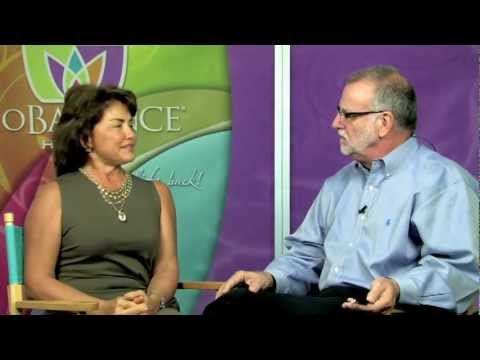
[music] KATH i, I’m Dr. Kathy Maupin and this is episode 51 of the BioBalance Healthcast. BRET nd I’m Brett Newcomb. Today we’re talking about a subject that we’ve been talking about together for quite a while. We’ve done 51 podcasts now on hormone replacement therapy. And one of our emphasis is the hormone testosterone. We have been writing a book about testosterone for women because it gets down played in the public media and in the medical media that testosterone is a critical ingredient for women. When you talk about replacing testosterone in women what we have discovered is that a question that continually arises is the question of FDA regulation and legality. People don’t know about that and they keep asking us about it. So we thought today we would talk about the distinctions that are made with regard to FDA and legal supervision, regulation licensing, whatever the terminology needs to be about testosterone. KATH he FDA is the Federal Drug Administration. They are paid by the United States to keep us safe. They keep our drugs safe, our food safe, also over the counter drugs. So that’s very important to know. That’s your tax dollars, keeping you safe. They’re very spread out, however they have committees who research drugs and they look for their effectiveness, and they monitor how carefully they are produced and to make sure that they are sterile and to make sure they [the manufacturers] do the things they say they do. So all of those things are regulated by the FDA. BRET o when the Food and Drug Administration regulates a drug, what does that mean exactly? KATH hat means the drug is found to be safe, effective, not dangerous, or dangerous in certain parameters, in other words all of the side effects are listed for that drug. BRET o they monitor the production and distribution so that content control and quality control are standardized. That way anybody anywhere in the United States or anybody that buys a drug that is made and released in the United States is confident in the standardization of the quality. But is that all that they do is just monitor the quality of production and distribution? When you say they regulate it, anybody can go the store in St. Louis County where we live in Missouri and they regulate access to things like Sudafed. Somebody controls who can generate it, whether or not it has to become prescription. They make those distinctions? KATH hey decide whether it becomes prescription or not and they decide whether the public’s aware of a drug, like Tylenol, something like that, can be over the counter, and is safe enough and that the milligrams are actually appropriate for over the counter. In other words they’re usually half the dose of what a prescription medication would be. BRET o the things that a private citizen could decide for themselves. Oh I think I need this medicine and go and get an over the counter medicine. Over the counter means I can make that decision unilaterally. I don’t need to see a physician, I don’t need a prescription. But to sort of protect me from myself, they regulate the content dosage of the active ingredients in the over the counter meds. KATH ight, and they tell us that it needs to be filled by a pharmacist. And it can also be filled in some cases like injections and pellets can be filled through a physician. So they regulate that process. BRET hey being the FDA. KATH he FDA makes a decision is this over the counter? Is it safe enough? Is this to be distributed by pharmacists? Is this to be distributed by doctors? All of these things are the legalities of how we get our drugs. BRET o is all of this published in a location like the PDF the Physicians’ Desk Reference? KATH he PDR. The PDR has all of the drugs written, every side effect, every action, what the chemical structure is, everything that you wanted to know is in the PDR. But it almost takes an MD or a pharmaceutical degree to actually read it and understand it. BRET o read and understand it. KATH aybe a chemistry degree. Some of these things are so complicated it’s very hard to tell what they really are for. But most physicians know that. Because that’s part of what we’re trained. We’re trained to know what a particular drug family and a particular drug does, what the side effects are, who can take it who can’t take it. All of those things are in our memory. BRET o when you talk about regulation then of a drug and licensing of a drug, it’s my understanding as a layman, that they identify a usage, and they say this is the primary usage that you would have for this particular drug. Here’s a drug that’s used for cancer, here’s a drug that’s used for depression. But I understand that sometimes doctors use those drugs that are primarily designated as being understood to be used for this illness, for other things, that there are off label uses. KATH et’s talk about drugs that are approved for a certain reason. First the FDA says this drug is actually effective, that it actually does what it’s supposed to do and it’s not too dangerous for us to take. That’s the regulated part and it should be administered by a pharmacist or doctor. The next step is they have to go through a huge process as to whether it’s effective for a certain illness. That’s the approved part. They approve it for arthritis, they approve it for seizures, they approve it for migraines. BRET nd how did they come to that approval? KATH he drug is usually championed by a pharmaceutical company and the pharmaceutical company has put a lot of money into R&D which is research and development. They’re the people that invest in this. BRET hey want to patent their particular or copyright their particular ingredient combination of these drugs? KATH r they’ve already done it. So they can own it. And they’ve invested all this money then they go to the FDA with their studies that they’ve paid for to prove that it works for a certain disease. Then the FDA looks at it, and looks at the studies to see that they’re been done appropriately and that enough people are helped by it and then they say yes this is approved for a particular disease. BRET kay, so if you see on television a company that says we do medical studies and if you want to pick up some chump change you know come and apply to our company and maybe we’ll take a weekend and dose you with a lot of interesting things. Most of which will be placebos. What’s going on there is that some pharmaceutical group is trying to do the background work to make an application for approval to the FDA. KATH hey’re regulated too. They have to get their trial approved to make sure it’s safe for the people in the trial. So they have to go through an approval process just to do the trial. Then when the trial’s done then the FDA looks at all their studies and decides. BRET he research, the data collection, the parameters for all of that are predefined in the application for the trial. Then when they reach their conclusions and they turn that information into the FDA they go back and check to make sure that all of that is accurate. Which is why it takes so much money and so long a period of time to get something to be approved in the United States. KATH hat’s why drugs cost so much because the approval process is so intricate and they’re so careful that it takes years and years to come up with a particular drug. And then what happens is the pharmaceutical company comes to the FDA with a patented drug and then there’s maybe only 5 years left on the patent. They have to make their money in five years. So they have to charge a lot. BRET hich is why the named drugs are higher priced than the generic drugs. And why when you fill out a prescription form you mark whether or not a generic can be substituted for the name drug. KATH nd the name drug is called a brand. When your doctor signs on the right hand side of the prescription it means, that he only believes the brand will work for you. Or maybe there’s not a generic yet. If he or she signs on the left hand side that means that the pharmacist can substitute the generic for the brand. And that’s fine as well. All of those things are ways to save money but the generic doesn’t come out until the patent’s run and the drug company that did all the work has to earn its money during the time the patent runs. And sometimes they’re 5 years, and sometimes they’re 10 years. Sometimes they’re 3 years by the time they get to the public. BRET o they have to front load their cost recovery which is why brand name drugs are so expensive. KATH ight and I’m not justifying the cost of drugs. I’m trying to explain why a little pill that probably cost 5 cents to make isn’t just 5 cents. Why it might be $2 a pill because of all of the research and development it took to actually get there. BRET nd not to mention production and distribution costs. KATH nd marketing, marketing to patients. That happened several years ago they used to not do that. We used to have drug reps always come in and market new products. And now it’s marketed to the patients. Patients come in and say I want Boniva. Sally Fields uses it. I want it. BRET don’t know what it is or what it’s for but boy she looks good and so I need to have that. KATH o marketing has started to, that’s very expensive, television marketing. So that adds to the cost. One of the things that I think is funny, Viagra just went generic.1 Viagra use to be 20 bucks a pill. Viagra is now like 3 bucks a pill.1 BRET ecause they’ve recapitalized their investment and the patent has run out.1 KATH ny company can make it. So it’s generic Viagra. So then any pharmaceutical1 company that makes generics can do that. So having said all of this okay we now know that1 we have regulations. BRET was going to say I’m up for1 that but I guess I probably shouldn’t. KATH ’m going to ignore that. We now1 know that we have regulations by the FDA. Then they have to approve a drug for a certain1 diagnosis. However those drugs are often used off label. Meaning a doctor knows that drug1 went through a process that proved that it worked for one use. But they know because1 of their pharmaceutical training, by reading everything they can about the drug that it1 can be used for a different use as well that it wasn’t approved for. Maybe the pharmaceutical1 company didn’t want to spend more money on another approval process. Maybe they didn’t1 think they’d make money off of it. It was only for a very small number of people who1 got like orphan disease, a very small group of patients.1 BRET remember years ago there was a drug called interferon. That was so expensive1 because there was such a small segment of the population that would benefit from it.1 But for those people it was literally a life saving drug. So you have the question of one1 administration of that drug could cost multiple thousands of dollars because there is not1 the volume to justify mass production so they don’t get approval on these secondary or1 tertiary applications that doctors may figure out. And in their experience with the patients1 about whom they have knowledge and with whom they have relationships they say alright because1 of your health history I want to try this medicine with you. So the professional clinical1 judgment of the physician comes into play when you talk about off label application1 of a regulated or an approved drug. KATH ight and actually it’s a regulated1 and approved drug because it’s approved for one use. We’re now talking about; let’s1 say interferon you brought that up. Interferon is now used in a cream form. So I had a drug1 rep come to me and say here, here’s some Aldera, it’s a cream, we use it for vaginal1 warts. Not a pretty subject but that’s what gynecologists use it for. So I look at the1 label. It’s interferon. That’s what’s in it. So I know that interferon can be applied1 to brown spots or pre-cancerous skin lesions. Because it’s precancerous so interferon1 is going to decrease its ability to multiply and it should go away. So I was losing it1 off label for people who had potentially abnormal brown spots.1 BRET o not for the warts. Which is what they.1 KATH h I was using it for that as well. BRET es but you also knew what it did,1 and how it worked, and what its ingredients were that it could be applied to discolored1 skin that might be pre-cancerous. KATH hat’s right. And not all doctors1 are really good at pharmacology. But we’re trained in it. That’s what we do. In medical1 school we spend a whole year on pharmacology. I mean that doesn’t sound like much but1 in medical school that’s pretty intense. And so we understand the different types or1 families of drugs and how they’re used. So having said that when you use a drug off1 label it’s very common. But many doctors say “I never use a drug off label. I think1 that’s terrible to use a drug off label.” But if that were the case with every physician1 we’d never find new uses for drugs. Because you can go back to the FDA and have it re-approved1 for the new reason or the new diagnosis. BRET ithout doing all the research all1 over again? KATH ou have to do some of it but you1 don’t have to do as much. And it usually is re-approved often times, but if it’s1 going to generic it’s not going to be re-approved. But if it’s still under patent, they’ll1 re-approve it for another use. BRET k so we’re talking about three1 concepts involving understanding the framework through the FDA about a drug. One concept1 is if the drug is regulated. Another is if it’s approved for use for particular diagnosis1 or illness and the third is off label applications that the use of which can be determined by1 physicians. And all of that is legal, all of that is acceptable to the FDA.1 KATH ll of that is legal, in fact all the drugs we’ve been talking about are legal.1 There are a whole other area of drug use that’s monitored by the DEA and only by the FDA when1 they’re looking for doctors that are mis-prescribing controlled substances. Those are addicted1 drugs. BRET ell we’re going to talk more1 about that in the next podcast as we continue this conversation. Because they’re so much1 information that has been brought into focus for people to truly understand so that they1 can make good consumer decisions and/or so they can talk to their physicians about what’s1 most appropriate for their unique circumstance. But we’re not talking about mass produced1 medicine even though we’re talking about mass produced medicines distinction. So it1 requires the knowledge the expertise, and the risk taking capacity of your physician.1 KATH f you’re going to write off label. Because non-risk takers will never write off1 label even if they know there is no other drug to cure you and they know this drug but1 it’s approved for a different reason. BRET ell we’ll talk about some specific1 examples of that in our next conversation. And one that I want you to be thinking about1 is the one that you told me about as a labor and delivery drug that was an off label use.1 So we’ll come back to that as we continue our discussion about the food and drug administration1 and the regulatory/legality process. KATH f you’d like to know more about1 bioidentical hormones or medical things, because we’re not just talking about that please1 go to my website at BioBalanceHealth.com or call our office at 314-993-09631 BRET ou can also contact us through my blog which is brettnewcomb.com.1 [music]1 Copyright ? 2011 BioBalance Health | St. Louis, MO 63141 • 314.993.09631 Produced by Davis Interactive.