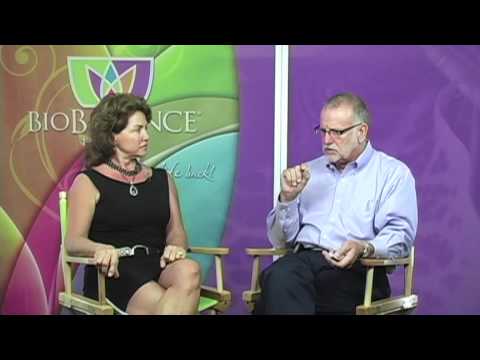
[music] KATH his is episode 45 of the BioBalance Healthcast. I’m Dr. Kathy Maupin. BRET nd I’m Brett Newcomb. Today we’re talking about something we’re very excited about. We are in the process of writing a book in response to questions and comments that we’ve gotten from the podcast and from the clients and patients we’ve both seen. What we’re doing is writing a book and the title of the book is going to be. . . KATH I Want What She’s Having”. BRET nd there’s some very deliberate awareness in the selection of that title. Part of it comes from things that people say to you, that your patients say to you. KATH ight. BRET n terms of identifying people that seem to be living more vibrant and healthy lives and seem to be enjoying themselves more. Part of it is the very delicate issue of libido. And the fact that one of the things that occurs as we age is a decline in the libido. And so part of “I Want What She’s Having” is a direct reflection of the movie scene that everybody knows. KATH ight, but it’s even more than that. It’s” I want to look like that, I want to feel like that, I want to have my life back”. Usually, most of my patients are referred by the their friends. Their friends want them to have what they have. And want them to be back to their normal selves. BRET ord of mouth is the best advertising you can have. Money can’t buy it, I mean literally. KATH t is, and it’s amazing that I have so many referrals from my patients. There’s so happy. But when they come in they say, “Well my friend, Janet said I’m great, so I want what she’s having. “ BRET ut sometimes you have people that cycle back around, that have done it and then stop doing it for any number of reasons reach a point of deterioration literally where they come back and say, what? KATH ell they really love me because they know they’re going to get better they’ve had it proven before. But they usually come in a say “look, I’ve done this before because of facial hair, or something minor, and I didn’t continue it. But now I can’t think, I’ve gained 30 pounds, I’ve done all these things that I didn’t want to do. But now I want exactly what you’re doing. I want to be you.” But really it has to do with more of the treatment that I take and that I live by the same things that I suggest to my patients. BRET nd what they’re really saying is I want my life back. I want to be back where I was when I was 20 or 30 and not where I am now, not where I find myself. That’s an example of a story, that’s a real story. Real patients come in and literally. KATH es, that was yesterday. BRET esterday someone came in and said those things to you. And part of the reason that we’re telling the story today is because over the last year that we’ve been doing this podcast we have been developing this book idea that we’re writing called “I Want What She’s Having”. KATH I Want What She’s Having”. The secret hormone, testosterone. BRET nd it focuses on 6 things that we think millions of women would benefit from by reading the book. And the first is to understand that they’re not just aging and getting older. That this is a condition that they suffer from that has either been misdiagnosed or undiagnosed. I have talked in my practice to numbers of women who, as they age and develop some of these symptoms; chronic fatigue, lethargy, weight gain, loss of muscle mass, loss of libido, loss of sharpness of thinking, all of those kinds of things, they say “well I go to my doctor”, usually when they say that they mean their gynecologist. KATH ight. BRET nd they say I go to my doctor and my doctor looks at me and runs some blood tests and says there’s nothing wrong with. You’re just getting old you’re going to have to live with it, buy larger clothes, move on. KATH nd this happens after age 40. This doesn’t happen at menopause, it happens 10 years before menopause. And there is no real good term to name it. And the doctors act like they’ve never heard it before. I’m a doctor so I know what patients say when they come to see me, they say “my doctor said it was nothing, and that my labs were normal and that I should just suck it up.” That’s basically what they say. BRET nd you know this because all of your patients say that and being a doctor you know what doctors are trained and what they’re taught, especially gynecologists and obstetricians. But, secondly, you’ve personally experienced most of these things. And when you hit 40 and you had a hysterectomy and you had a lot of these symptoms and you went on a quest to go to doctors, good doctors, or reputable schools to say what’s wrong with me, and they told you what? KATH ell one told me that I should see a psychiatrist and I always said I already have one and he says I’m fine. BRET utside of being crazy, medically you’re fine. KATH es, medically, and no I’m not crazy. And then I went to an endocrinologist or two and they all said “well we did the test and everything is okay so”, they didn’t give me an answer or a direction so, just live with it. BRET ne of them told you to buy larger clothes. KATH es and they told me I was just fat and that I was lazy. And I’m nothing like lazy, I’ve never been lazy. I just didn’t feel well. I was looking for some compassion and some help and I was looking for what doctors are supposed to give you. And in these very specialist areas, doctors have become very crusty, and they don’t give a lot of compassion. They just told me basically that I had to live with it and that even though I felt terrible and I was going to have lose my practice because I couldn’t get up in the middle of the night anymore. I couldn’t take care of people the next day after I’d been up delivering babies at night. I had migraine headaches, I had all of the symptoms that my patients now hav 27joint pain, weight gain of course, breast enlargement, breast pain because the testosterone was not there so I had a lot of estrone and estrone is high risk for breast cancer. I knew what that meant and I didn’t want to have breast cancer. I wanted to correct that but I didn’t know how to correct that at the time. BRET o this label that people are given that you’re just getting old, it’s a natural part of aging, it’s part of life, just live with. What you’ve discovered is that in some measure it’s a result of compartmentalization of knowledge and that gynecologists don’t have the endocrine knowledge, they’re not focused on that when they go to school to be a gynecologist and endocrinologists don’t necessarily focus on the issues women have as they age. KATH nd they don’t treat women for their menopausal hormones. They treat diabetes and other things. BRET nd they don’t treat women for menopause, they treat endocrine specially issues. So by crossing those barriers and combining the knowledge of each specialty you have identified what you are naming a syndrome. KATH es. BRET hat you as part measure in this book are trying to get people in the community and doctors to become aware that this is a label that can be applied to this cluster of symptoms and for which there is an appropriate and successful treatment. KATH hat’s right. If you can label a syndrome that happens all the time or that happens over and over and over again, with a certain constellation of symptoms. I’ve named this testosterone depravation syndrome which is a correct description of what’s causing this. So if you can do that, then you can actually get research money. You can actually get insurance to pay for treatment. My treatment presently is not paid for by insurance for women. BRET ecause it’s not in the diagnostic manual as an identified syndrome. KATH es. There’s a book that the government puts out that all insurance and Medicare follow that gives a number to each condition or disease and that has to be on your check out sheet for your insurance to consider it. So if it’s not there. BRET ight, when you go to the doctor and you get a receipt if you look there’s a code, and that code number tells the insurance company this is what you’re being treated for. And testosterone deficiency syndrome is not a code. KATH here’s a testosterone deficiency syndrome for men called andropause. But we can’t use that for women. It’s gender specific. So we may say andropause, that is another term for testosterone deprivation, but it isn’t qualified diagnosis for women. So we can’t use that for payment. BRET ’m glad to know that we are covered. KATH f course. Men are covered. FDA has approved testosterone in this form for men, but not for women. And that’s just another thing we cover in the book is the difference between the diseases that are taken care of both by research and by funding, in terms of insurance paying for it, for men and for women, the gender difference. And that should be stated, women should actually know that’s real. And that people aren’t just poo-pooing them about this and saying that’s it’s not a real problem. It is a real problem. And it gives us a road block to our future in terms of being cared for by medicines that are developed in the United States. BRET o in the book we talk about the economic realities, the political realities and the cultural realities that have lead to this disparity in treatment availability for women. K asically we talk about everything my patients ask me every day. “Well how did this happen? Why is this, why doesn’t anybody know about this?” Well I’m answering the question, why doesn’t anybody know about this by writing the book with you. BRET reat. KATH o I want people to know about this. I want people to know that they are not crazy. And that even if they’re told that they should believe their inner voice that they are in fact ill and they need treatment. And they don’t need 5 medicines to treat this like anti-depressants and sleep aids and. . . BRET eight loss pills. KATH sych drugs. They need testosterone. And that treats all those symptoms and also I talk about, I use testosterone pellets. It’s really the best way and the only way to have a safe level of testosterone to have all of these symptoms go away. Bio-identical hormones are always better. But bio-identical hormone pellets with testosterone are the ideal way to go back to normal, because it’s like you have your ovary again. BRET ight. There are multiple ways that testosterone can be delivered to the system. And your argument is that the bio-identical pellets work better, more comprehensively, more consistently, and more economically then1 any of the other methodologies. KATH do contend that for good reason.1 I’ve used, before I discovered pellets I’ve written prescriptions for testosterone gel1 that doesn’t last a whole day you have to keep re-applying it. I’ve used testosterone1 sublingual tablets. Which, by the way, is a waste of your money because 95% of the patients1 don’t actually absorb the testosterone from sublingual tablets. I’ve written testosterone1 vaginal tablets that go way up and way down every day. And women are not very happy or1 nice when our hormones go up and down. BRET t causes mood swings.1 KATH ight, it gives us mood swings. So the best way is pellets because you put1 the pellets in the hip and they work for four months and you don’t even have to think1 about it. BRET o we talk in the book about how1 women need to talk to their doctors. To be informed consumers, to approach their doctors,1 to say are you aware of this, do you have this information, would you look at this information,1 and then make decisions based on the doctors response of whether they will continue to1 put their trust in that doctor. KATH ight. Doctors were meant to be1 scientists and open minded and they were meant to listen, and frankly doctors are in a bad1 position today in the United States because HMO’s don’t pay them to listen or to actually1 get a big diagnosis. BRET t’s like herding cattle, they1 have to get numbers through their office everyday in order to make what they need to make to1 cover their overhead. KATH nd the only thing that’s going1 to fix that is to destroy or dismantle the HMO insurance management of medicine. However,1 a lot of us have gone outside of that and we don’t use insurance. So we’re outside1 of that. I spend a lot time with my patients and offer them a wide range of treatments1 when they come in to see me for testosterone. BRET o you spend a lot of time encouraging1 women to give them support to pursue this treatment for them. And also, the men in their1 lives that come in and say “well gosh, I want this too”.1 KATH hat’s right. Their husbands all come in.1 BRET o the goal, globally, is to stop unnecessary suffering caused by the lack of1 recognition of the condition and the lack of treatment protocols for it that are universally1 known and accepted by the medical community and the community at large.1 KATH really believe that one person can change the world. And I really want to1 change this for women, this section of the world. Because I see people cry every day1 “oh thank God, I’m not crazy.” BRET nd they look at you and say “I1 want what you’re having” because they see the change in you. And you talk about1 the loss of vibrancy and then the restoration of that vibrancy as you have been treated1 this way. KATH never ask patients to do anything1 I haven’t done myself. I eat a certain way, I eat a low-carb diet, I exercise. I can’t1 honestly ask someone to do what I don’t do, so I do that. Often times patients want1 the testosterone and they want the treatment but they aren’t willing to put in the effort.1 Now, frankly you have to put in the effort. It’s always effort to change your life.1 But it works. And you will never get that effort to work without the testosterone after1 40. So this is an unbelievable treatment and no one talks about and I’m so happy to be1 able to write a book with you about it. BRET nd I’m excited about it as well.1 Because it works in my life, it works in your life, it works in the lives of people that1 we know. It’s a phenomenal treatment for a very real condition and we want people to1 become aware of that and we are excited to be writing this book “I Want What She’s1 Having”. KATH bsolutely.1 BRET f you have questions about the book, I know it’s not out and available,1 but if you see this podcast and have questions or if you want to talk to us about something1 us. You can contact us, how Kathy? KATH t BioBalanceHealth.com or you can1 my office at 314.993.0963. BRET ou can also check my blog at brettnewcomb.com.1 Thank you for listening.1 [music]1 Copyright ? 2011 BioBalance Health | St. Louis, MO 63141 • 314.993.09631 Produced by Davis Interactive.