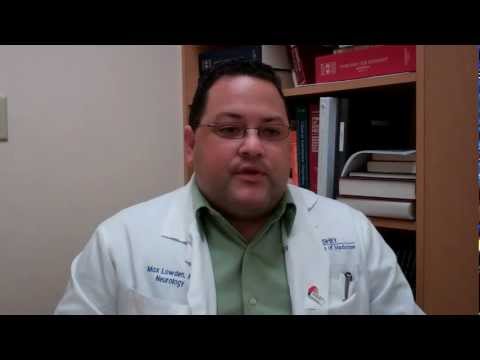
Restless leg syndrome is -- is a syndrome, which is a -- signs and symptoms, which are in -- with regards to R-L-S or restless leg syndrome, it's a -- it's an urge to move your legs. Once that happens, the patient or the subject will stand or move their extremities, specifically the legs, and they'll have an improvement of their symptoms. And the symptoms -- the urge could be pins and needles sensation in the legs, or what they call parasthesias, which is a more technical term. RLS, or restless leg syndrome, is fairly common. It affects around five to fifteen percent of the population. One of the issues is that we as physicians have to characterize the process, whether it's a primary RLS, or a secondary RLS. The primary ones are usually idiopathic, that means that no cause is known. And the secondary restless leg syndrome RLS is usually due to conditions like diabetes, renal failure, or disorders of iron metabolism, like an iron deficiency. Treatment options is supplying dopamine, which is given in a form of a tablet or capsule. And the patients will take medications such as Requip and Meripax, depending on if a patient is able to tolerate the side effects, or stay on that medication. In the Penn State Hershey Neuroscience Institute, we have our Restless Leg Syndrome Clinic, in which we first of all diagnose patients with restless leg syndrome, characterize the process -- that means that we've reviewed the differential diagnosis. Make sure that there's nothing else causing the symptoms, like for example neuropathy, which has similar symptoms related to restless leg syndrome. Also there's some sleep disorders that are very similar to restless leg syndrome, like periodic limb movement disorder. In our clinic we have a comprehensive evaluation for those patients, to see if there's anything else that is attributing to their symptoms. We also offer them research opportunity, if they are interested. Right now we're working on a research study that involves evaluating the blood flow in the lower extremities. So for example, a patient who does have confirmed restless leg syndrome, and would like to participate in the study at no cost to the patient, they will be evaluated for any abnormalities in blood flow of the lower extremities. Other potential research projects that are -- we're working on are to evaluate for spinal cord stimulation as an option for treatment. But that's still in the works. I emphasize that patients who do have symptoms of restless leg syndrome to get a comprehensive evaluation for their symptoms. At times they're on medications, and these do not seem to help. So that's when a question should be asked on whether they do -- first of all, whether they do have the diagnosis of restless leg syndrome, or there's another associated etology that is filling up their symptoms.